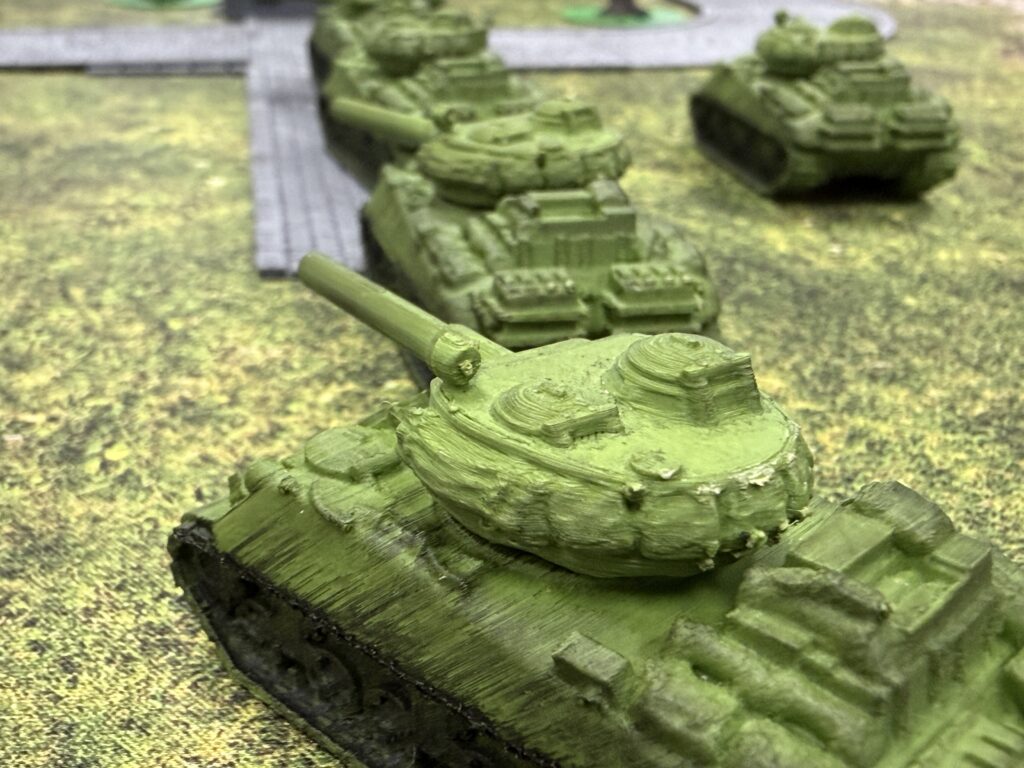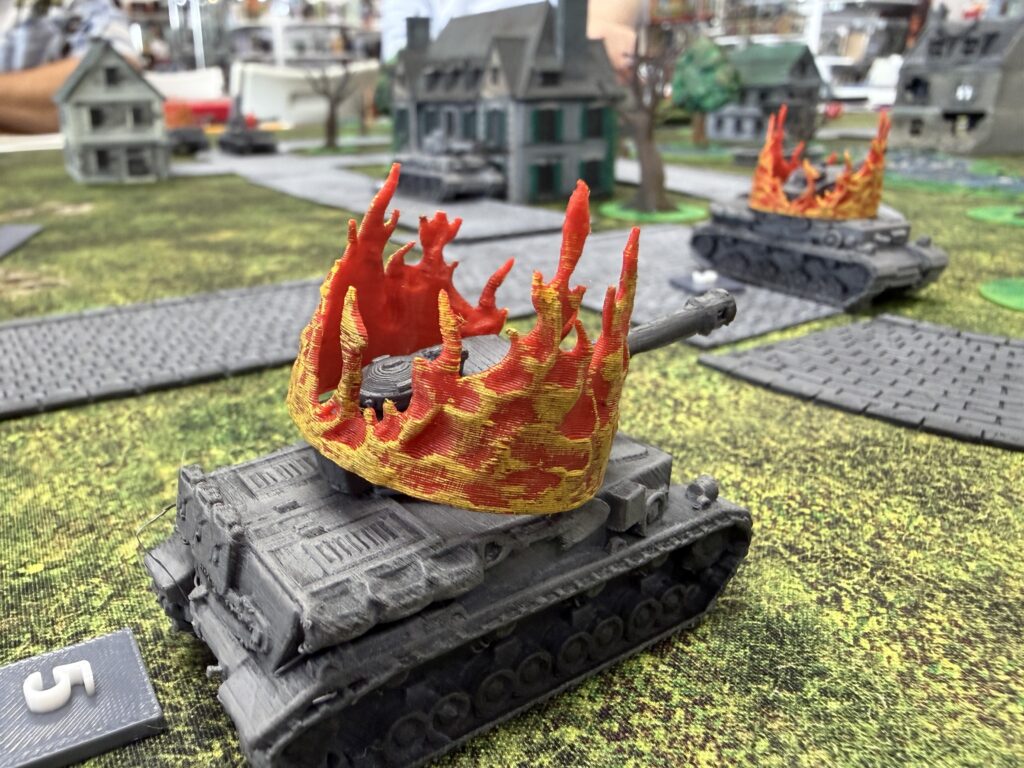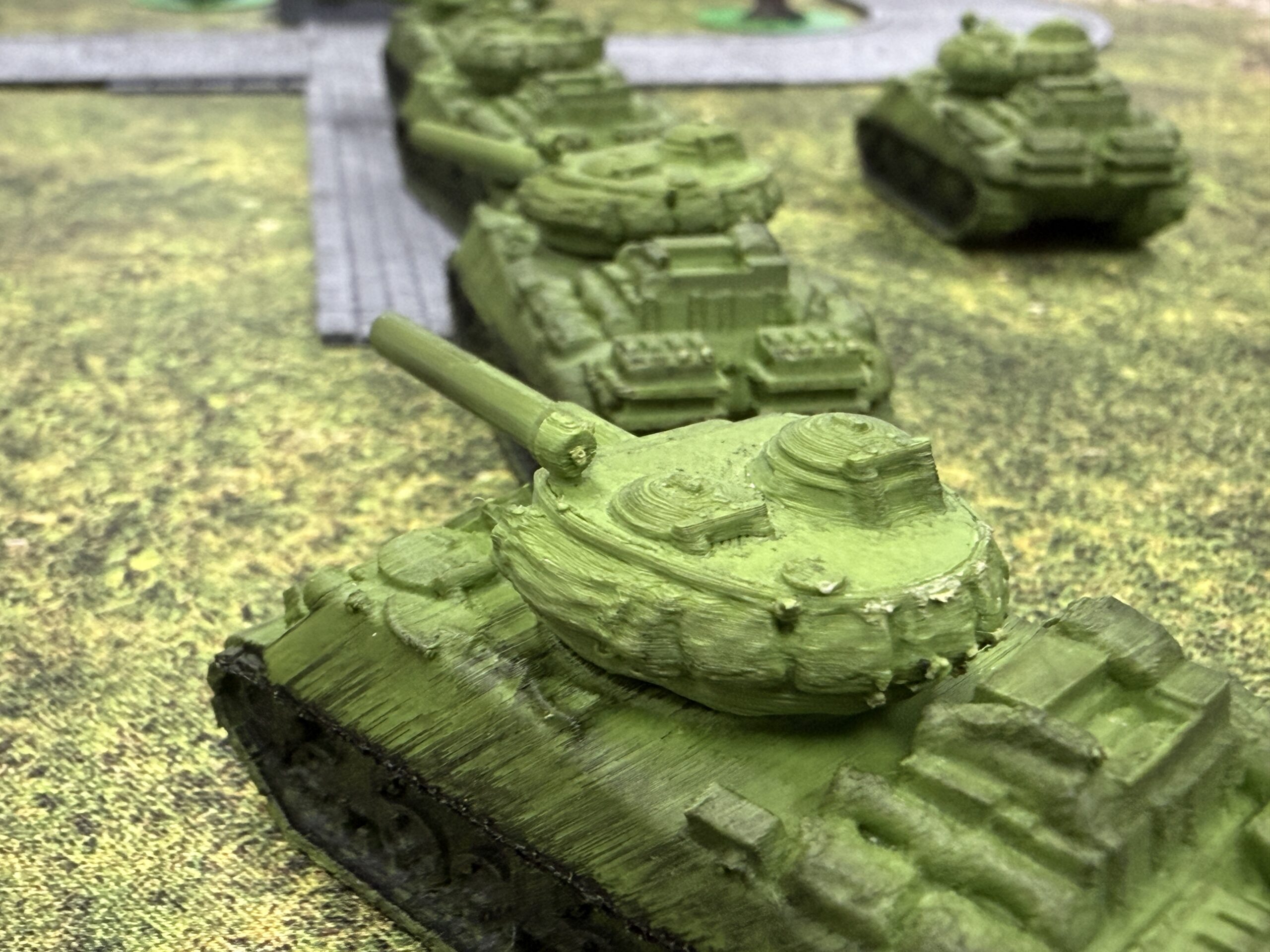
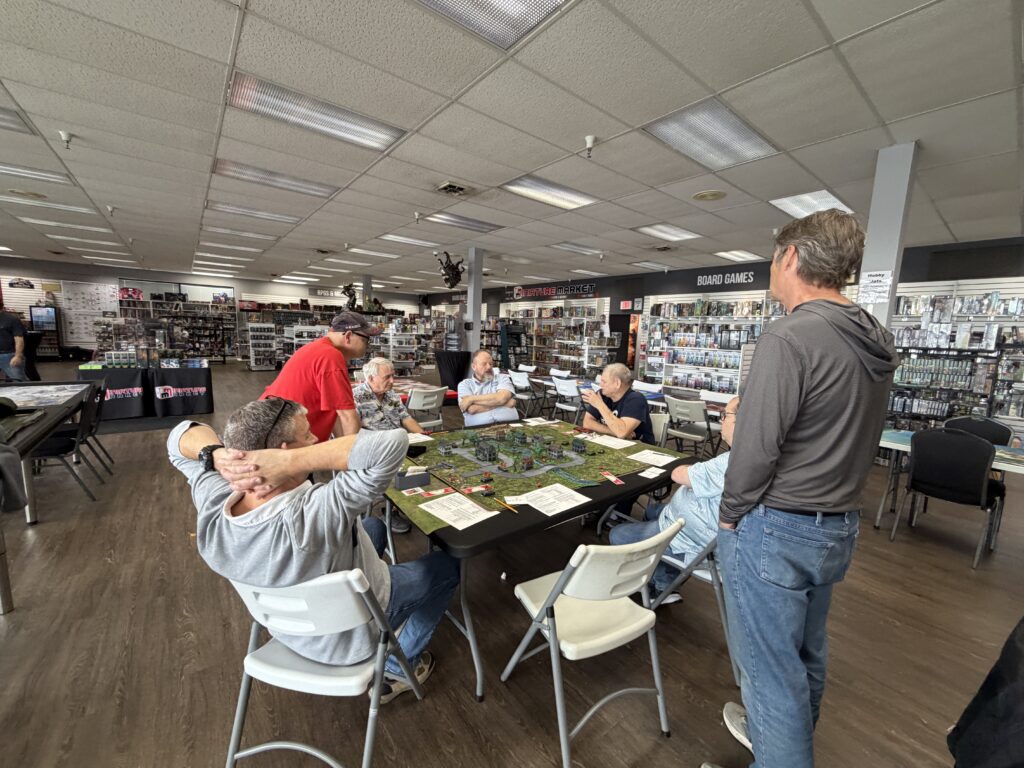
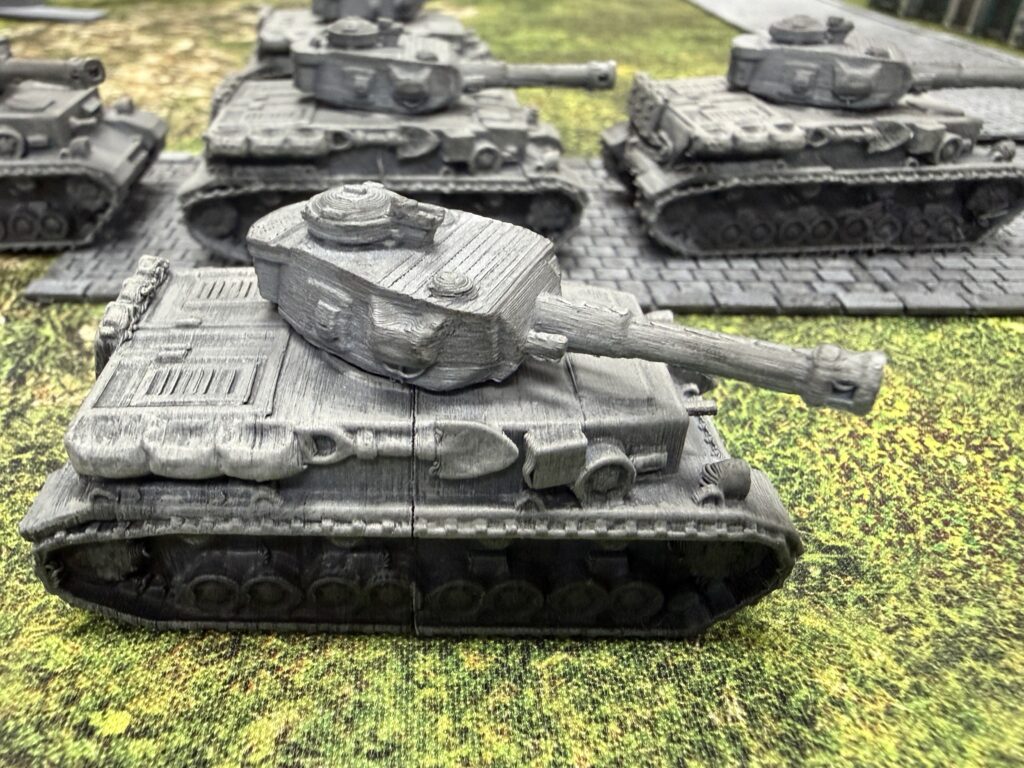
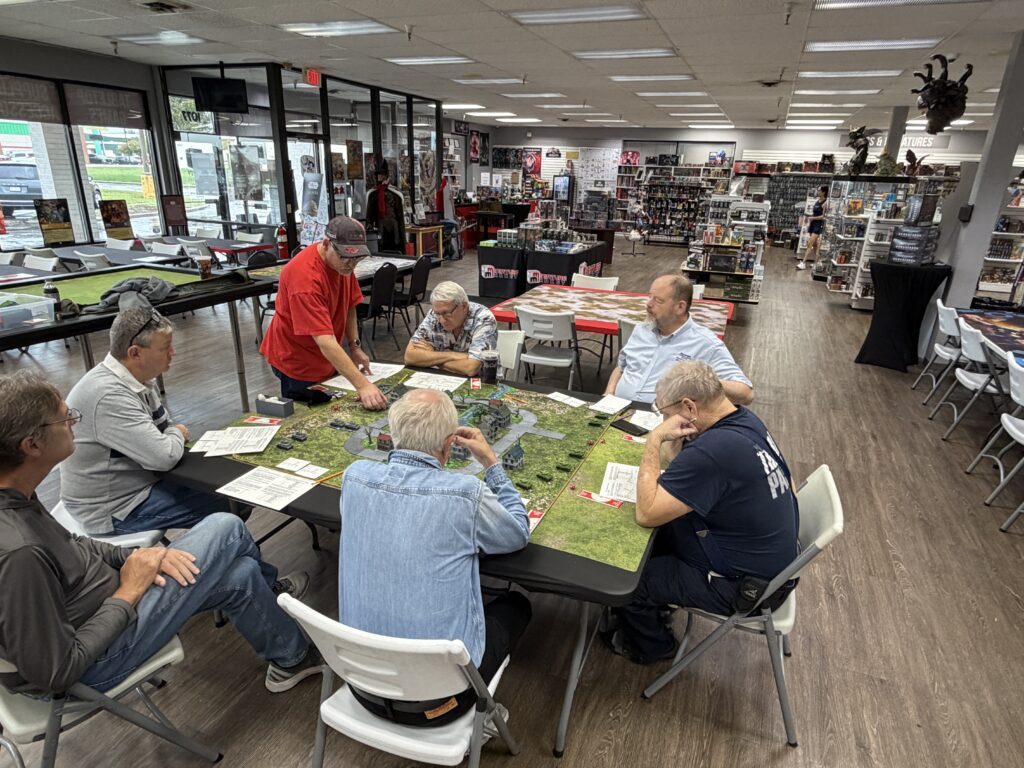
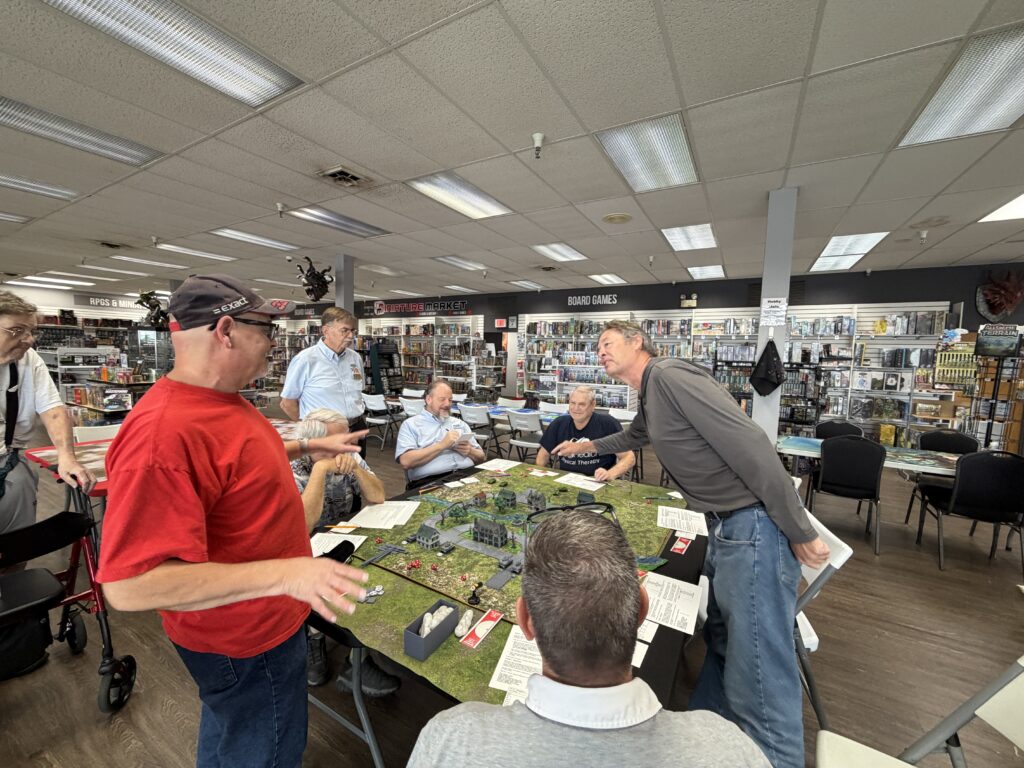
On what was a rainy and cooler afternoon our group of retirees gathered at Miniature Market Cave Springs for a bit of WWII tank action. DJ Carter had some fantastic looking 3D terrain and miniatures for everyone to enjoy as he presented Tank Club.
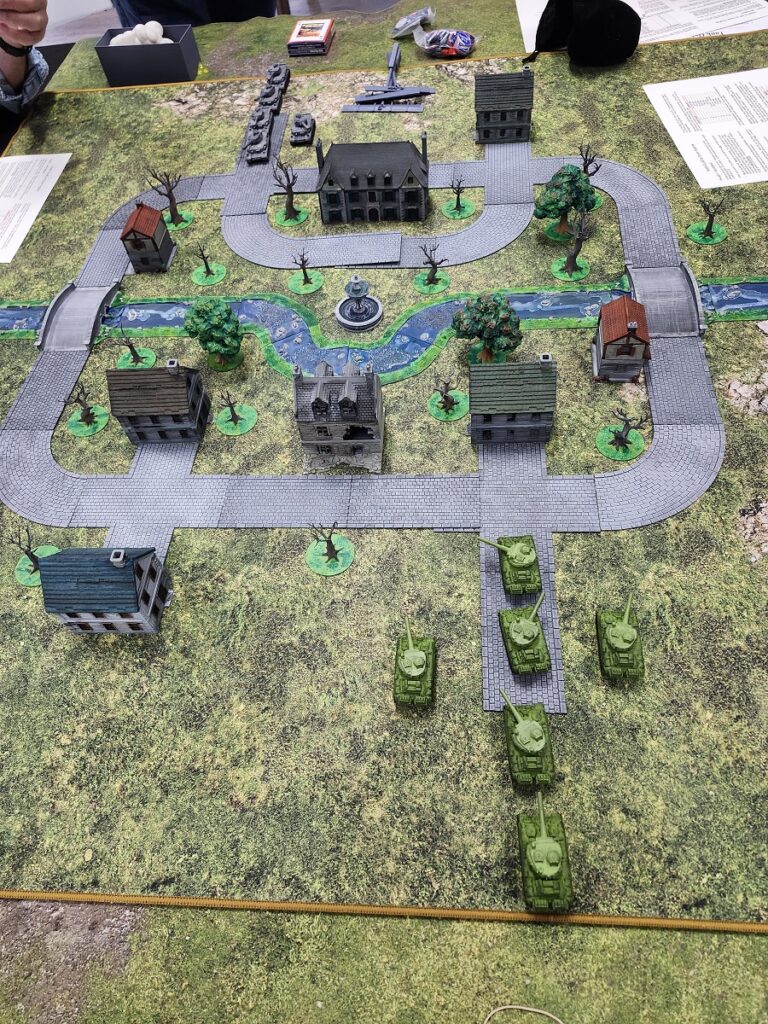
Jay was there notepad and pen at the ready, capturing the game as it progressed so we will turn it over to him for a play by play……
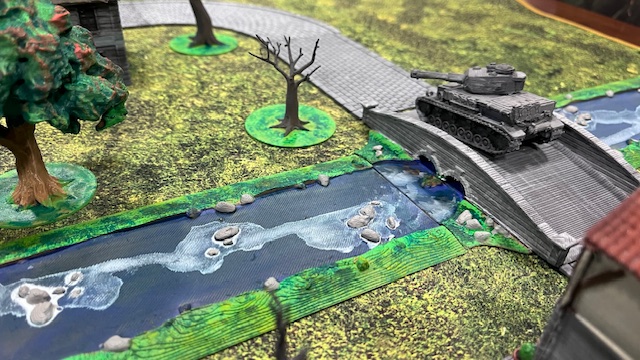
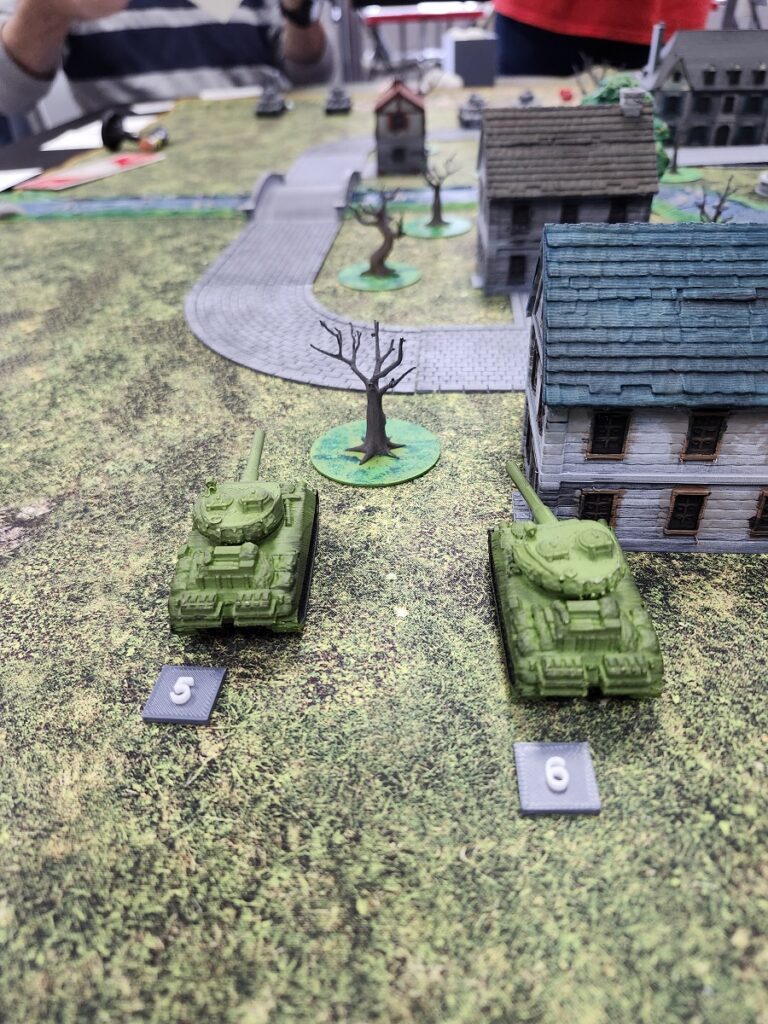
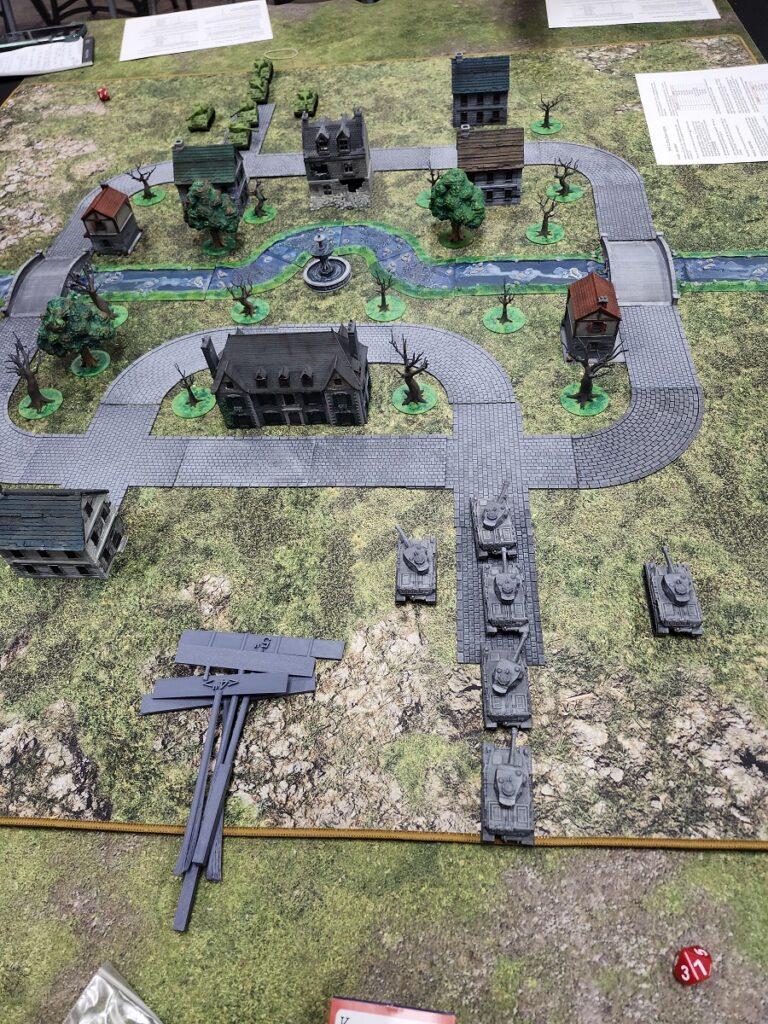
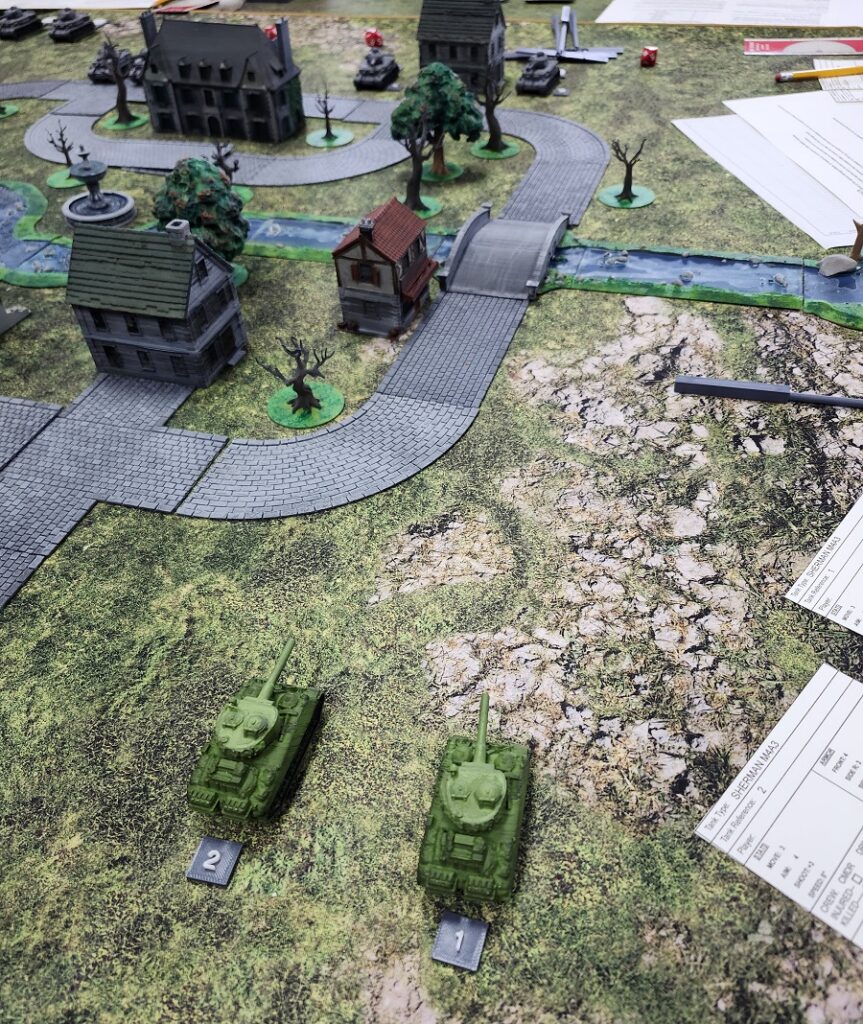
“1st Lt Kevin Smith was not happy at all with the situation. His 6 Shermans had made their way behind enemy lines and approached a critical crossing over a small river. The issue he had with it was the crossing was in a small village. His infantry support had not caught up yet and he didn’t relish going into a town he knew nothing about without any support at all. Well, orders were orders and his were to take the crossings and hold them until the rest of the unit caught up.”
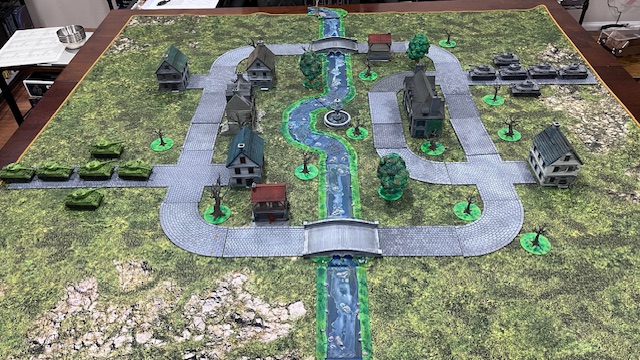
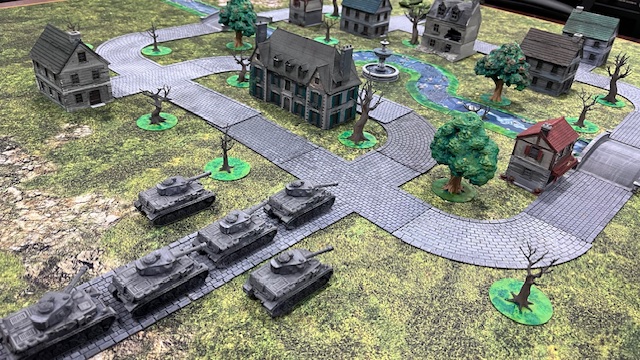
“Oberleutnant Hans Meyer was nervous as his unit of 6 Panzer MkIV’s approached the village. He was under orders to contain some American tanks that had broken through the lines and he didn’t have much information to work with. They had been seen approaching the village he was getting ready to go into and they could be waiting for his unit. He was also concerned about American airpower as well, but figured if he could get into the village, it would be better than being out in the open country. Either way, the bridges in the village were a critical point in this sector and he had his orders.”
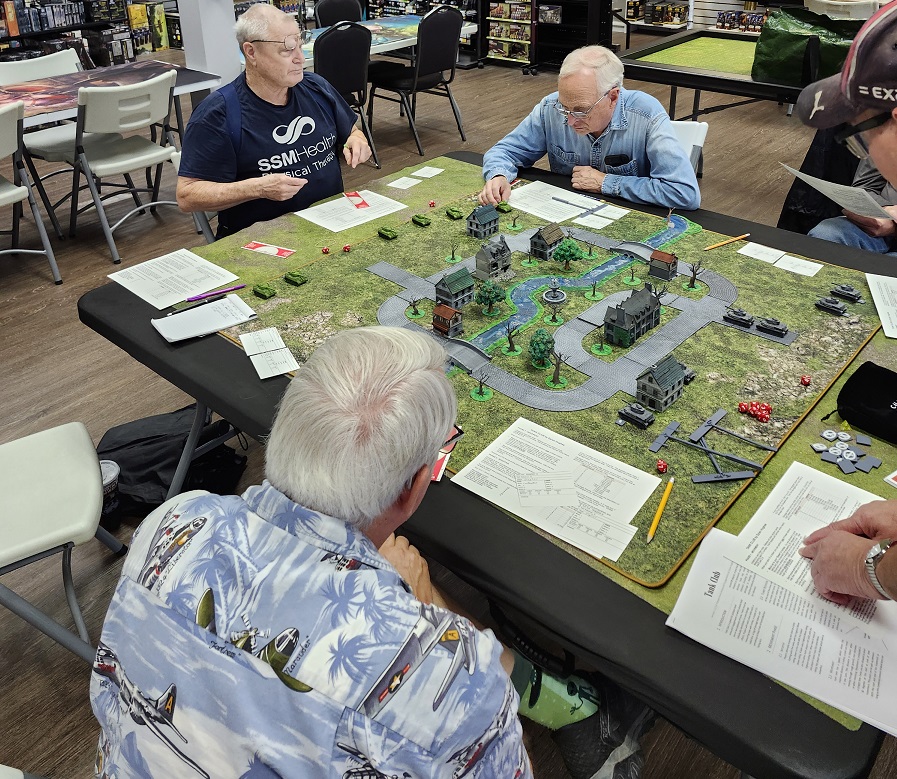
“The semi-retired group got together for some WW2 tank action with DJ as the ref. The system used is Tank Club Rules, which is new to most in the group. Tank Club Rules are designed for fast play and minimal dice rolling. Additional damage is determine by pulling blue chits (minor hit) or red chits (major hit). (Note: this is the type mechanic used by Blue Max). The interesting part of the chit system is the effects are generally not known to everyone, so the enemy may not be aware you can’t fire and/or move anymore. Things like amount of cover, distance, moving/not moving are taken into consideration before rolling a 10 sided die. Cards are used to determine movement order. Tank Club Rules also uses a aim and fire stat so firing is not considered to be simultaneous. This would cost the Germans dearly as the Shermans would get to fire first (and resolve their fire) before the Germans got to go.”
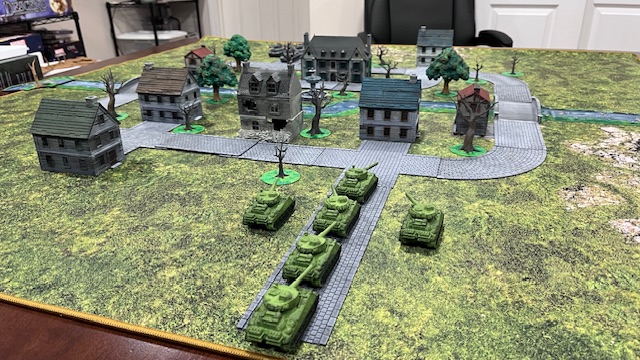
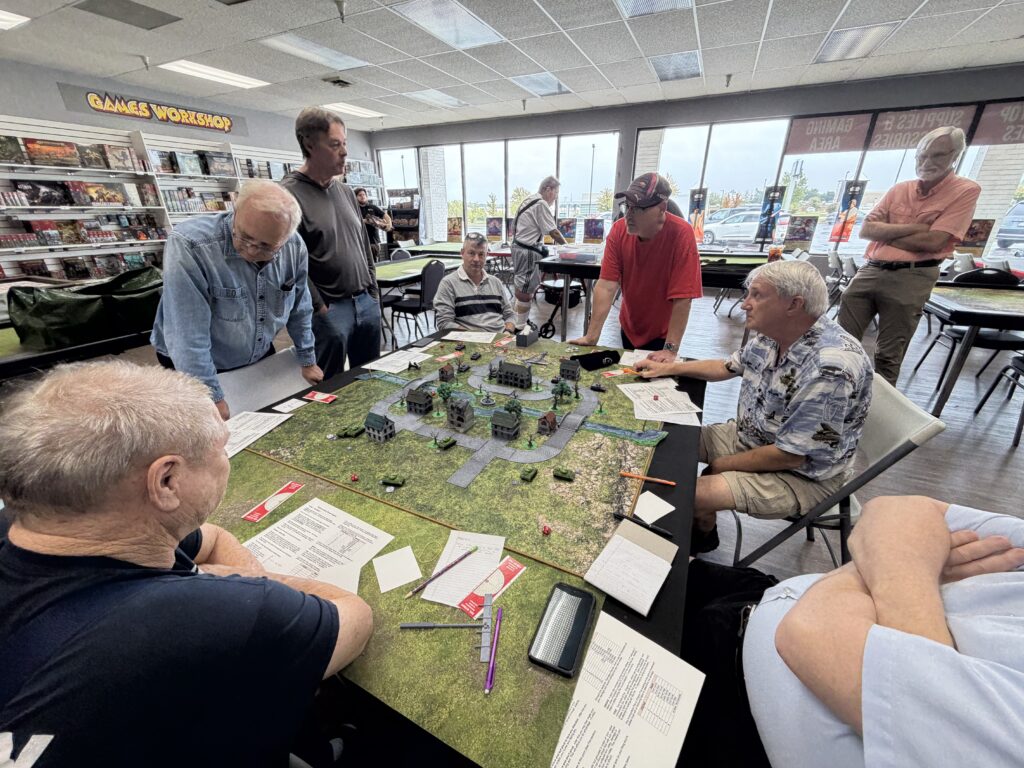
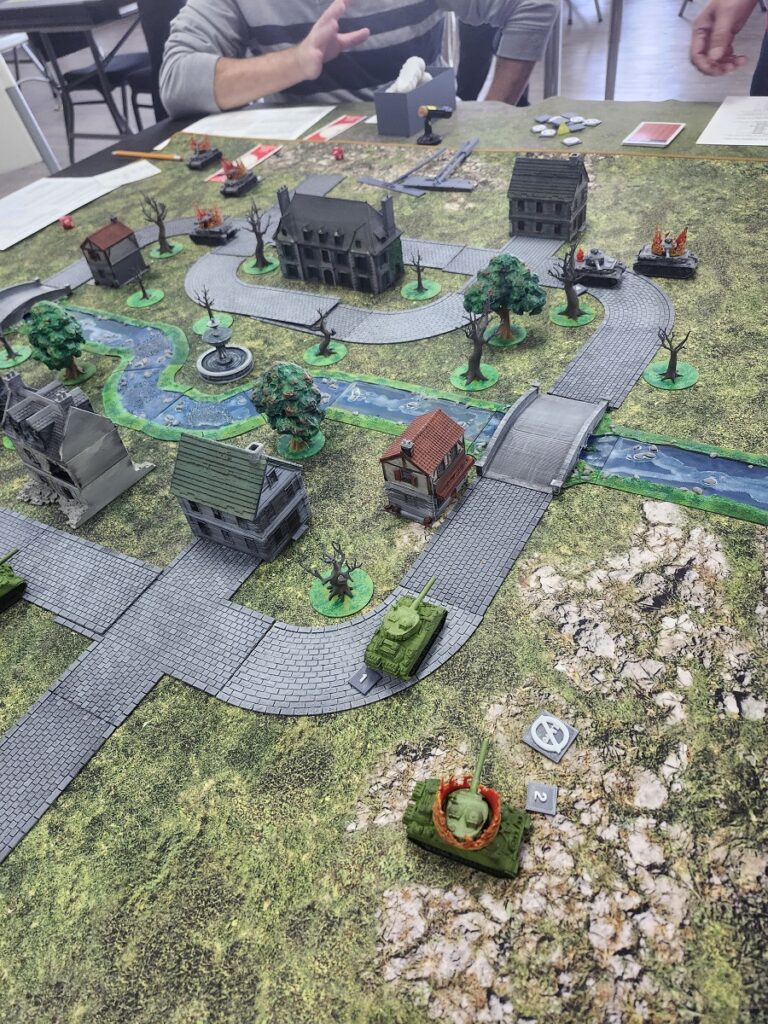
“The scenario was pretty straightforward. There were two bridges and whoever held them won. DJ has done some excellent work with the buildings, tanks, game pieces and terrain to make this look very nice”.
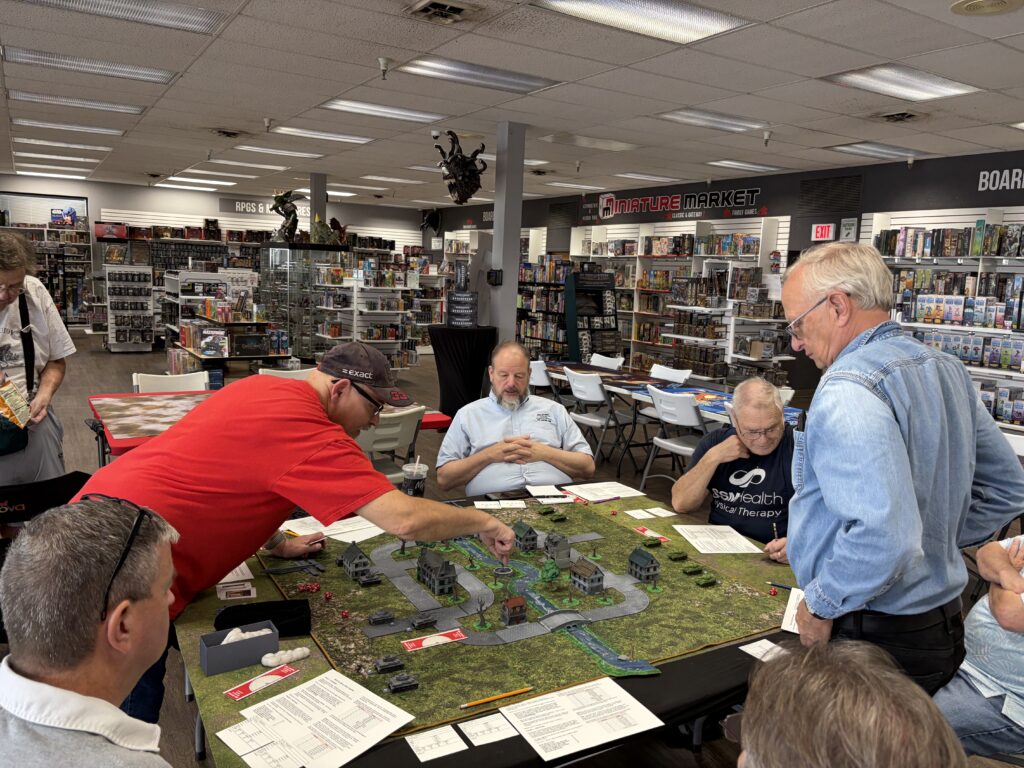
“The US side consisted of Steve T, Jay, Mark W. and Jules. The Germans were Gregg, Steve L, and Chris. Mark J, David and Bill stopped by later to observe the carnage.”
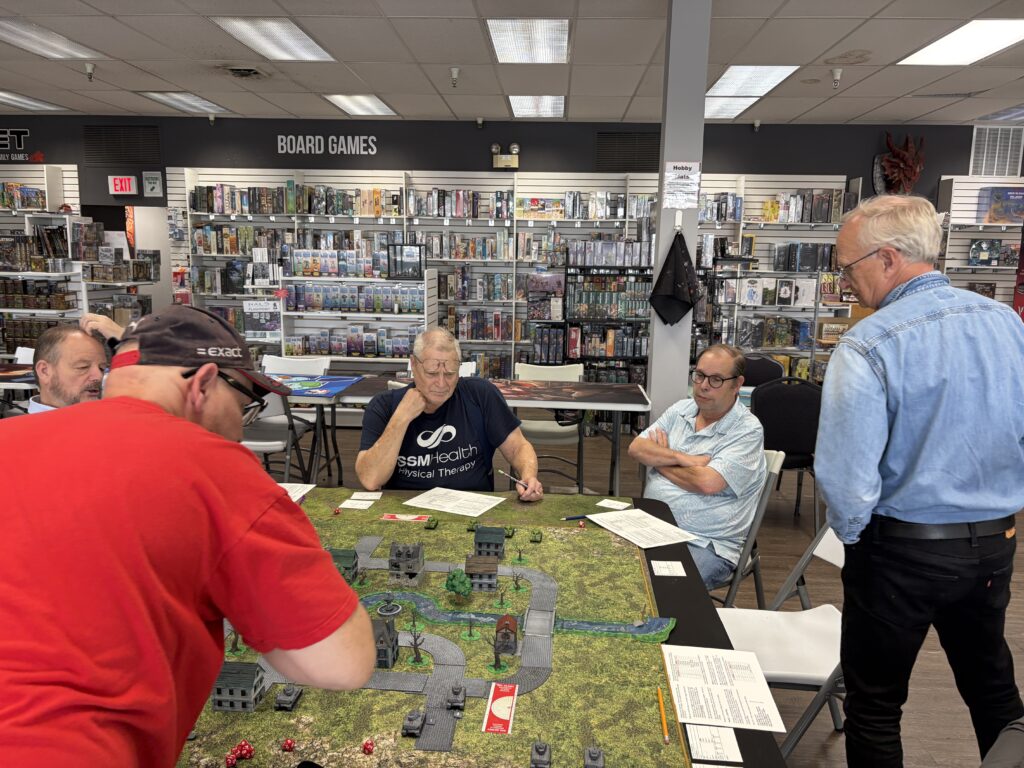
“The game opened with the US having to move most of their tanks before their German counterparts, so the US mostly advanced. Many of the German tanks didn’t move (get a shooting bonus doing that, but also do not give the US side a shooting detriment since they didn’t move). After movement, the Shermans opened fire with deadly dice scoring on 5 out of 6 shots and all their damage was in the form of red chits with one German tank going up in flames. The German dice were not nearly as good and while they did hit, they gave out mostly blue chits to the US tanks. (The difference between red and blue is pretty stark. While a blue chit might wound a crewman, a red chit would kill the crewman on a hit).”
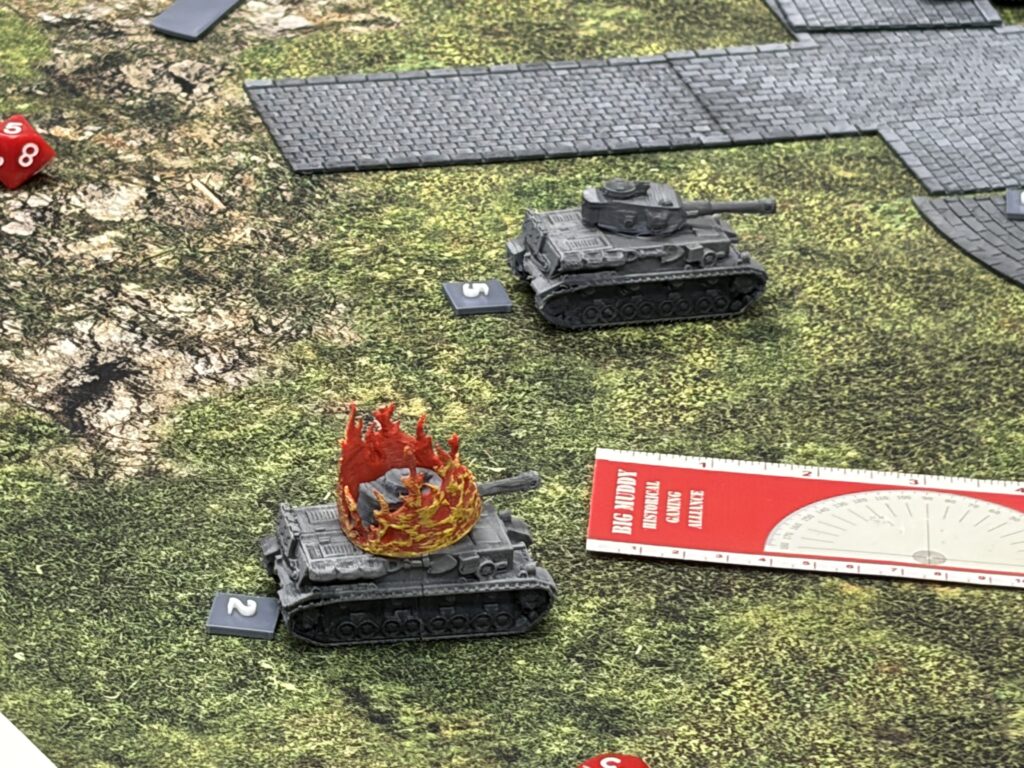
“Turn two starts up with the Americans again having to move most of their tanks before the Germans do. (Some grumbling is heard from the American side about DJ’s card “skills” for determining who goes when). This time, the Germans also advance. The Americans once again open fire and get the better of the exchange by knocking out another German tank and starting an obvious fire on another tank. The US again take mostly blue damage chits, which are affecting what they can do and when, but their tanks are still in action.”
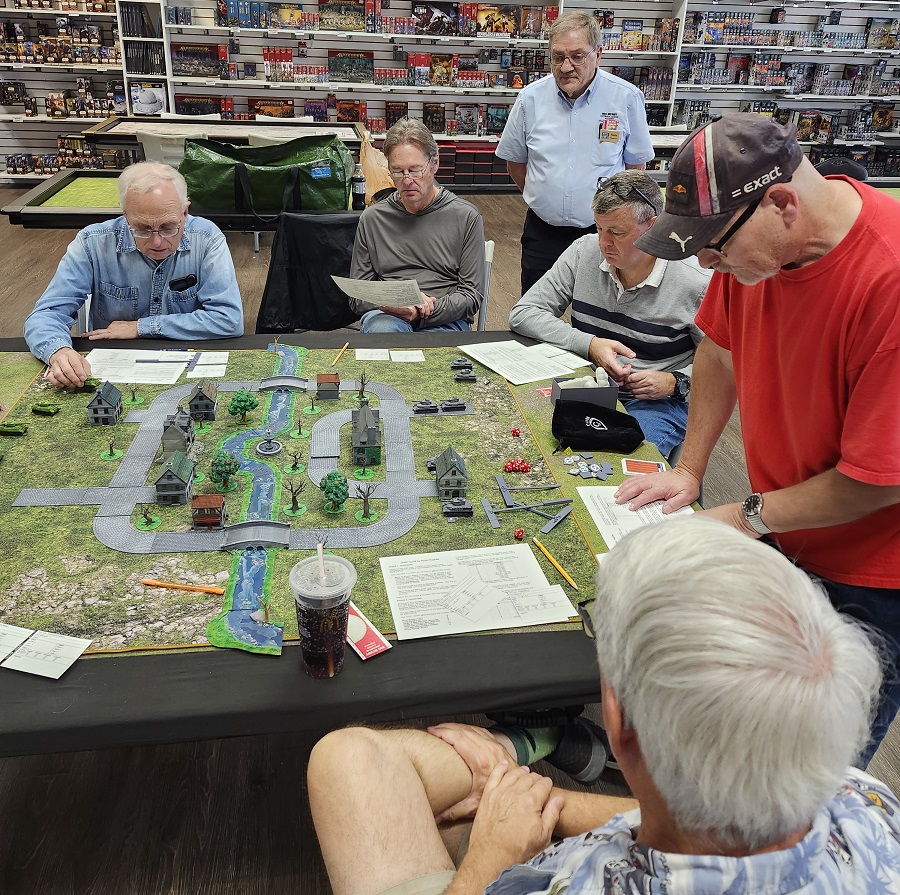
“Turn three has the Americans moving the majority of their tanks first again, but at this point, it doesn’t matter a lot. The turn is a deadly one for the US as they knock out two more Panzer IV’s while the US finally lose their first tank. The Germans are left with one tank on fire and no way to put it out and another tank that is hiding decides it is time to leave. The US still have 5 tanks with several under blue chit effects. There are several American crew injured and some dead from the fighting, but overall, the Americans carry the day. “
“As gamers like to do, a big discussion was held after on the merits and issues with the game system. (When discussing armor rules, there really isn’t any “right” or “wrong” as a lot of it is opinion. The two factors of complexity/realism and time/playability are at the opposing ends of the spectrum and it is hard to find the middle ground of something that has a good “feel” to it that also plays reasonably quick). Most everyone seemed to enjoy the rules, but also believe some changes need to be made. The big one was firing order as it gave the Shermans a decisive edge over the Panzer Mk IV. (It also helped the US diced really well early on their shots). All in all, I think this one will see the table top again at some point.”
Thanks to Jay for this great report on the game and pictures. We also would like to offer our Thanks to all the players who came out to enjoy a fun afternoon of gaming. As always we extend our ongoing appreciation to Miniature Market Cav Springs for their continued support.
Remember to shop local!
Big Muddy Historical Game Alliance of Greater St. Louis
Our public educational demonstrations including rules and game evaluation sessions use historical miniature and historical board gaming to explore military history, historical decision-making, and the people, places, and events of the past.
Historical Gaming in Action is a public educational program presented by the Big Muddy Historical Game Alliance of Greater St. Louis.
Using miniature figures, terrain, maps, historical research, and guided play, our games explore military history through the decisions faced by commanders, soldiers, and communities. Visitors can examine the table, ask questions, learn about the historical setting, and—when space and time permit—join the game.
Our scenarios are based on historical sources. While game rules simplify some details for practical play, each event is designed to encourage discussion of historical events, geography, leadership, logistics, strategy, and the human experience of conflict.
Historical gaming can be both enjoyable and educational. Big Muddy provides public educational demonstrations, seminars, and convention programming that promote historical miniature gaming and military history.