
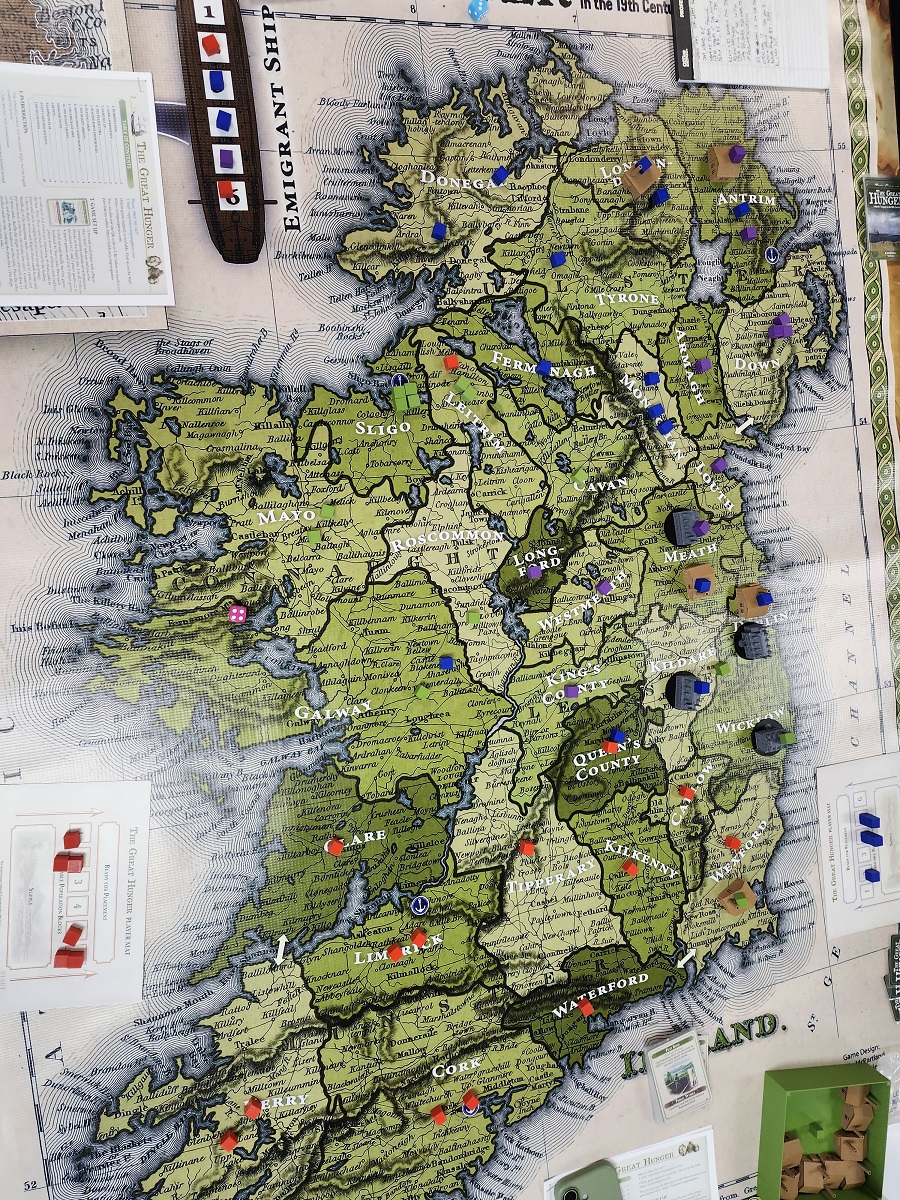
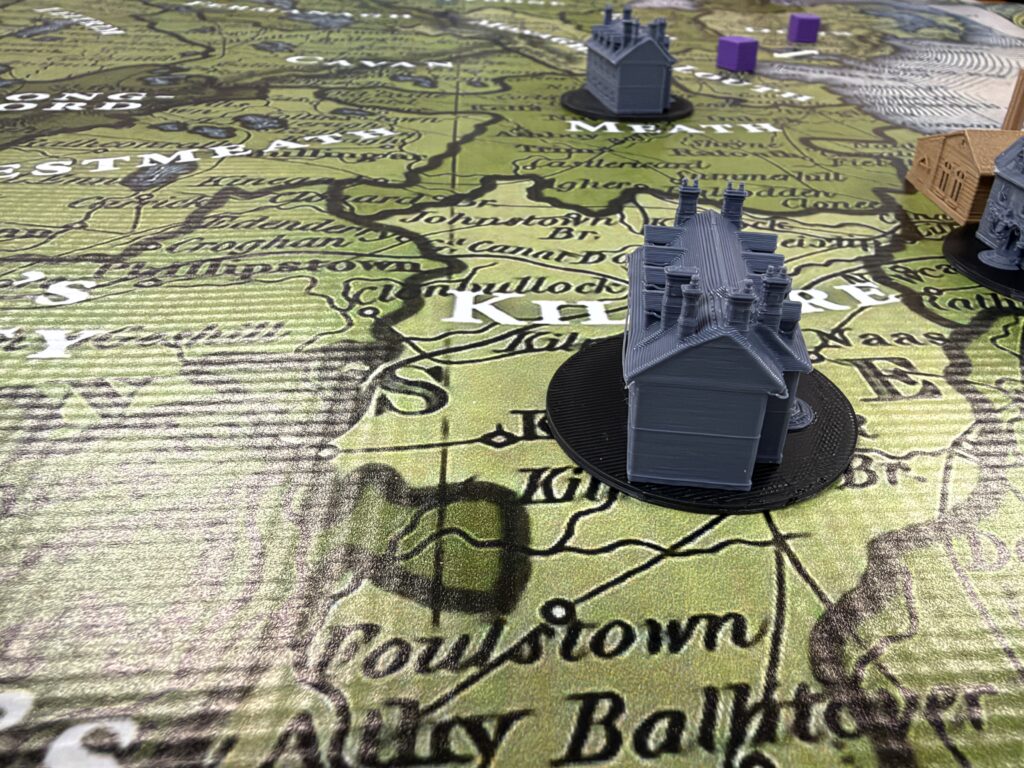
Miniature Market Rock Hill was the scene as our Retirees group gathered for an learning/evaluation session of Compass Games’ “The Great Hunger”, a game based on the Irish Famine of the mid 1800s that caused not only great suffering, but a diaspora leading to many of the population arriving on the shores of the United States. This enlarged and enhanced version of the game is intended to bring the story of this event to the future participants in our “History Through A Different Lens” Initiative.
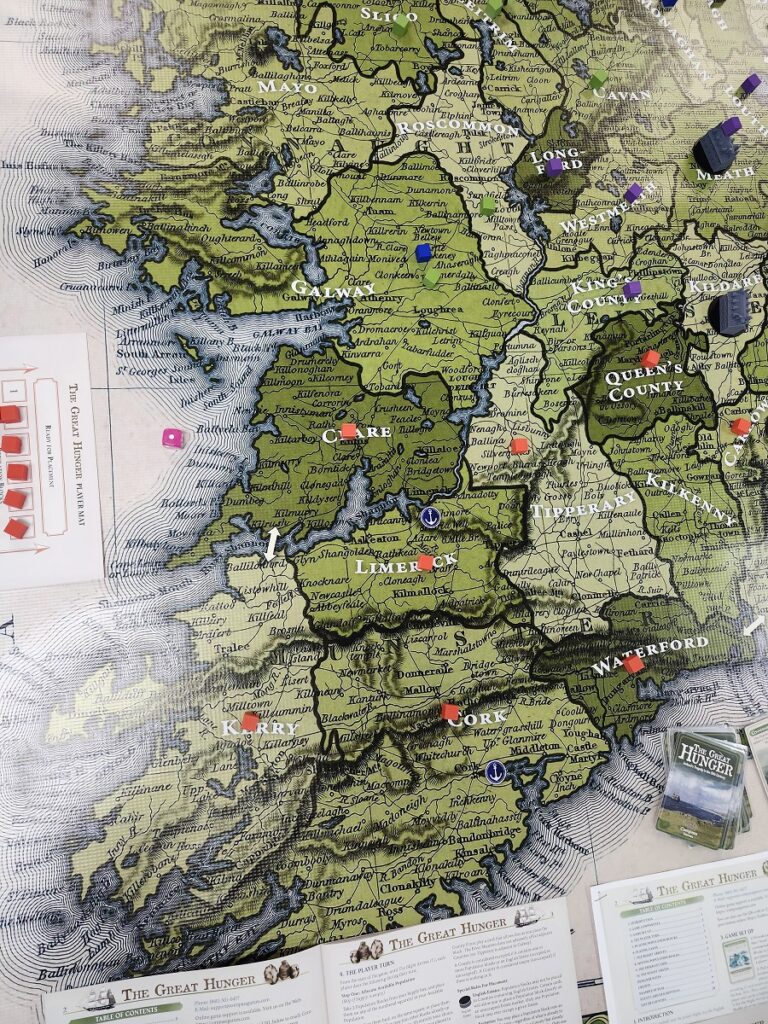
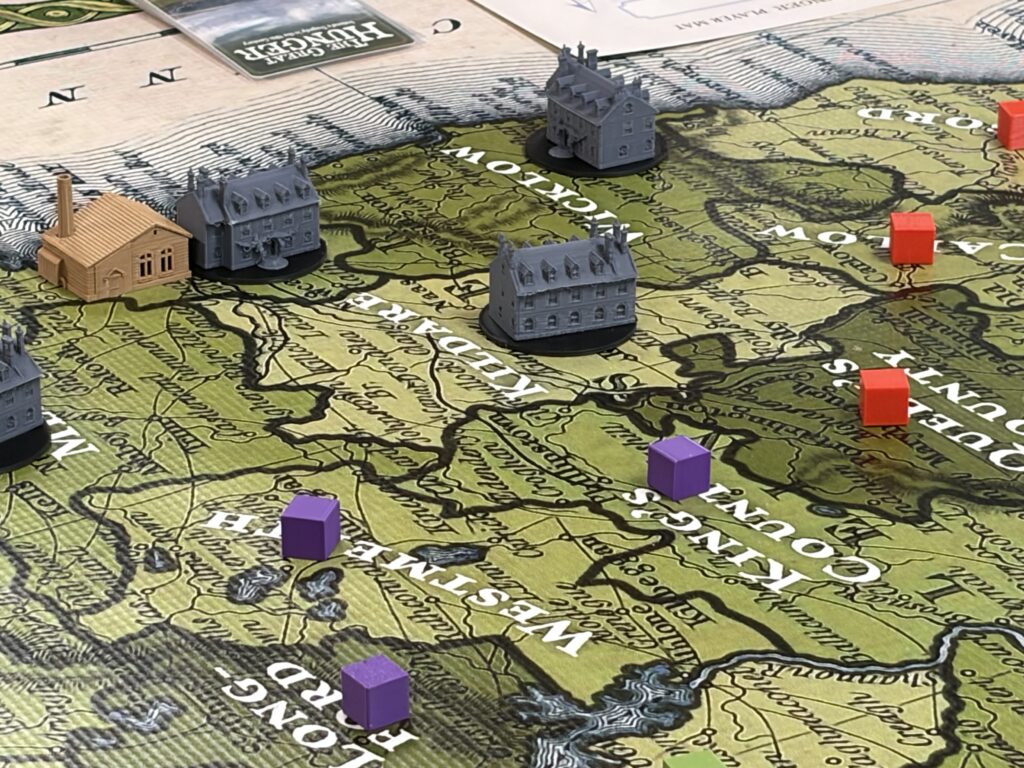
We would like to note that the enlargement of the game was only possible through the talent and skill of DJ who spent hours creating the pieces and the digital image.
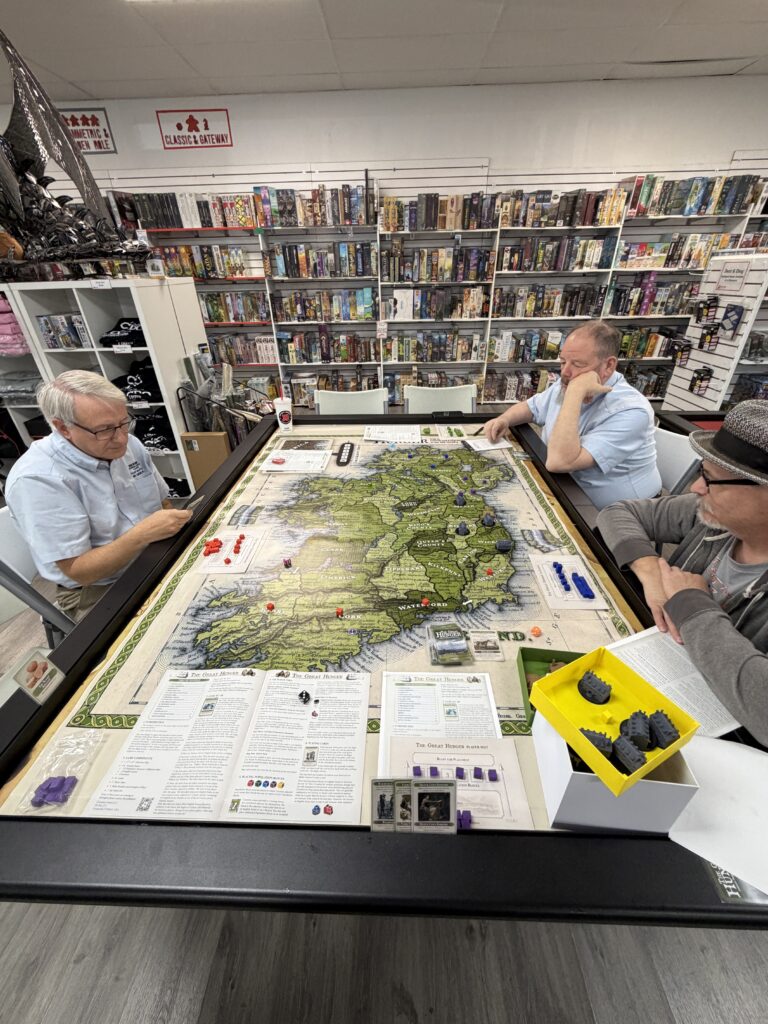
Jay was on hand for the afternoon as a player and reporter and was kind enough to give us his views on the action , so we will turn the tale over to him…..
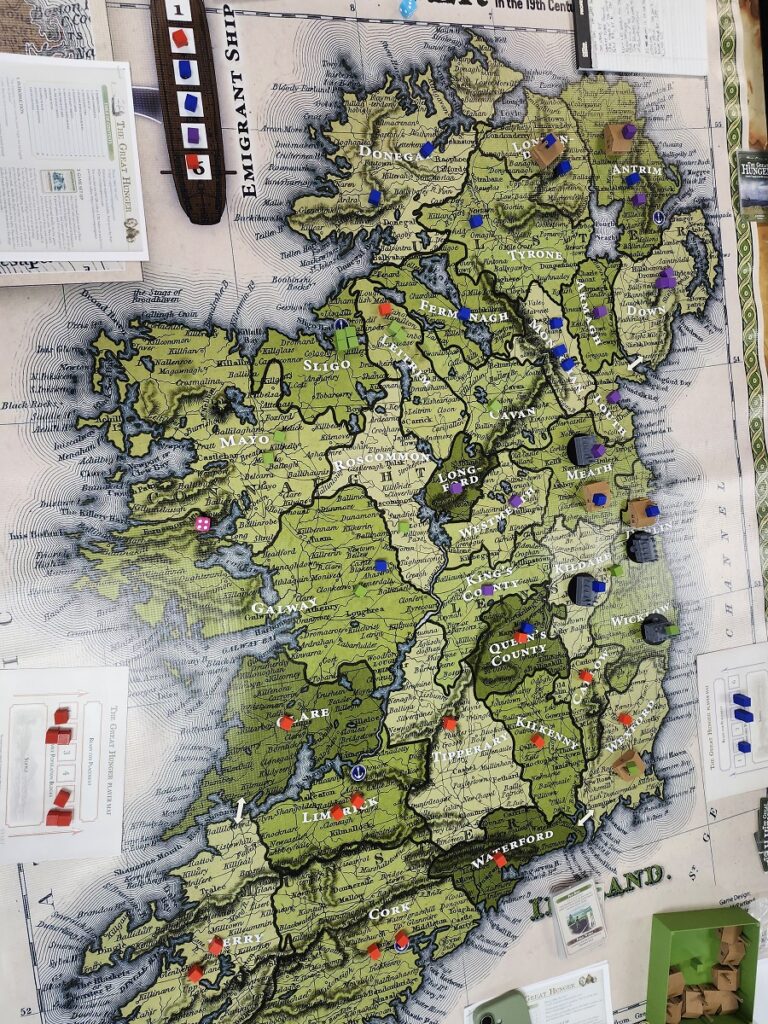
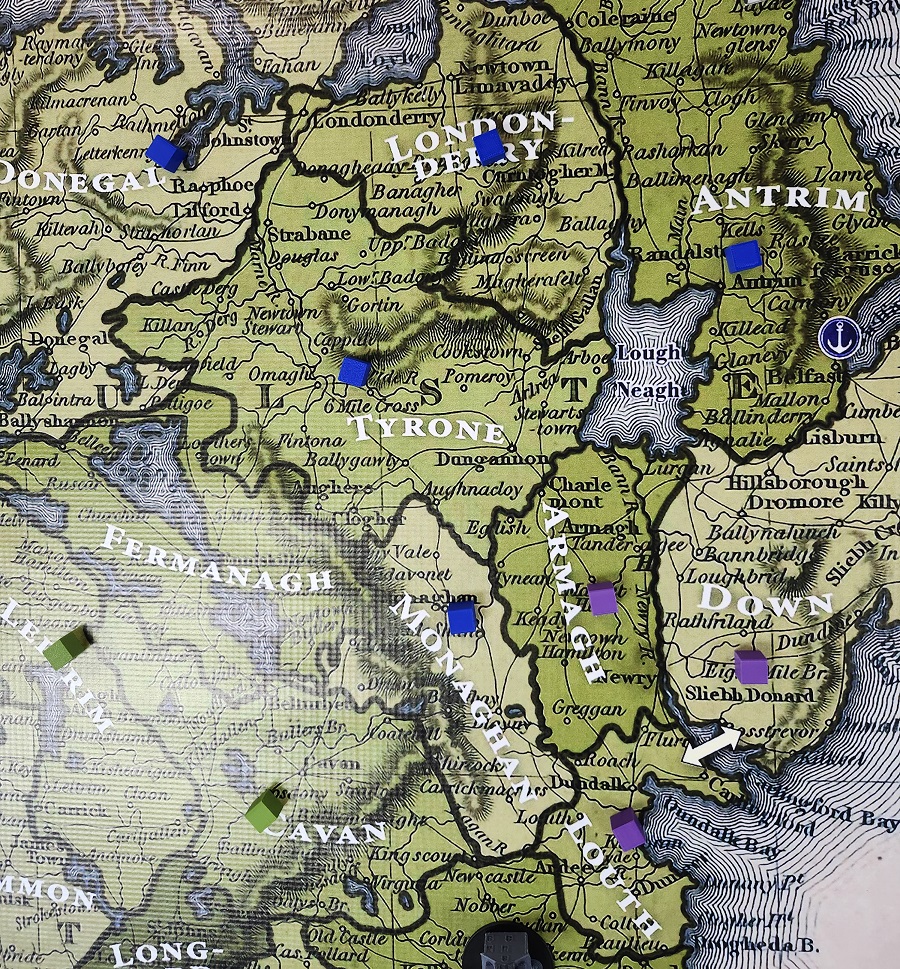
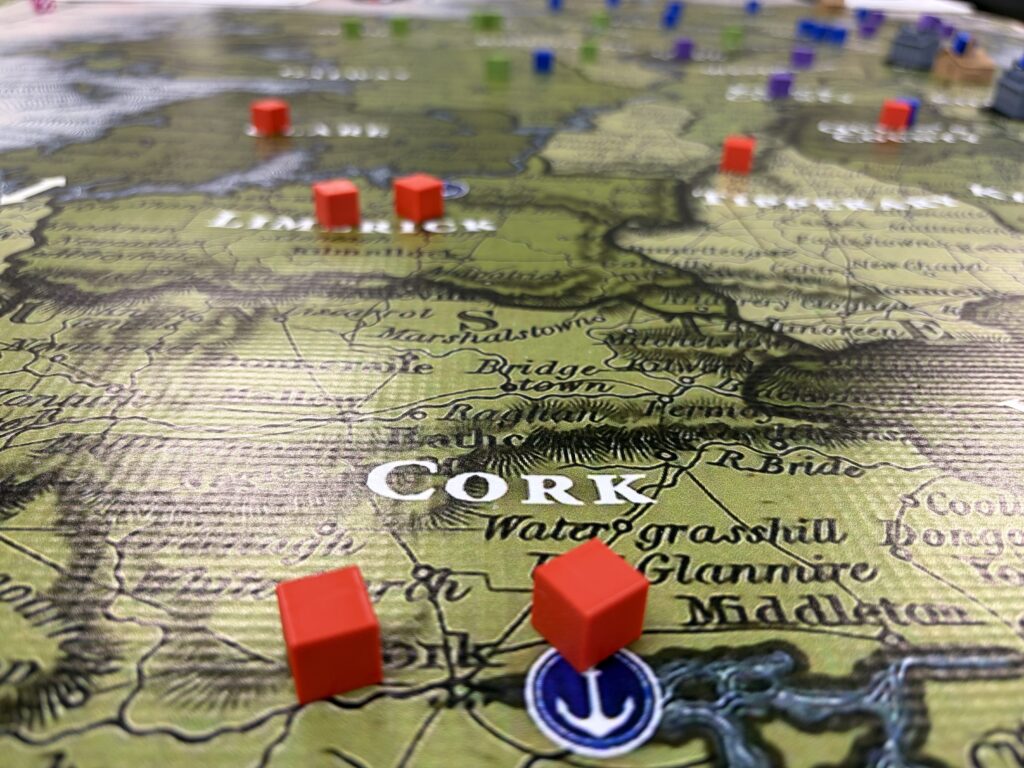
“The Thursday Semi-Retired guys got together to give The Great Hunger game a try. This is a game that has gotten the “super sized” treatment by Kevin with a blown up mat and 3D playing pieces by DJ. The Great Hunger covers an era of growth for Ireland followed by the great potato famine that resulted in a huge wave of immigration to the US in the 1800’s. The map is divided into counties and each player starts with 1 cube of population on the map. From there, they add population to a staging area and roll a die to see if they can place more population on the map. Cards can help assist with this in the first part of the game. Normally, only 1 cube can be in a given province at a time. Cards help break this rule along with having factories. While cubes are not allowed to populate counties with English estates, they can populate the English estates (representing staff). Once the potato famine starts, the cards change from helping you play cards to helping remove cubes along with trying to immigrate to the US. A ship going to the US has 6 spots and a die is rolled with the number rolled resulting in a population cube that didn’t make it. The player with the most cubes in American and Ireland is the winner when the famine ends. There are elaborate tie breakers if players wind up tied at the end.”:
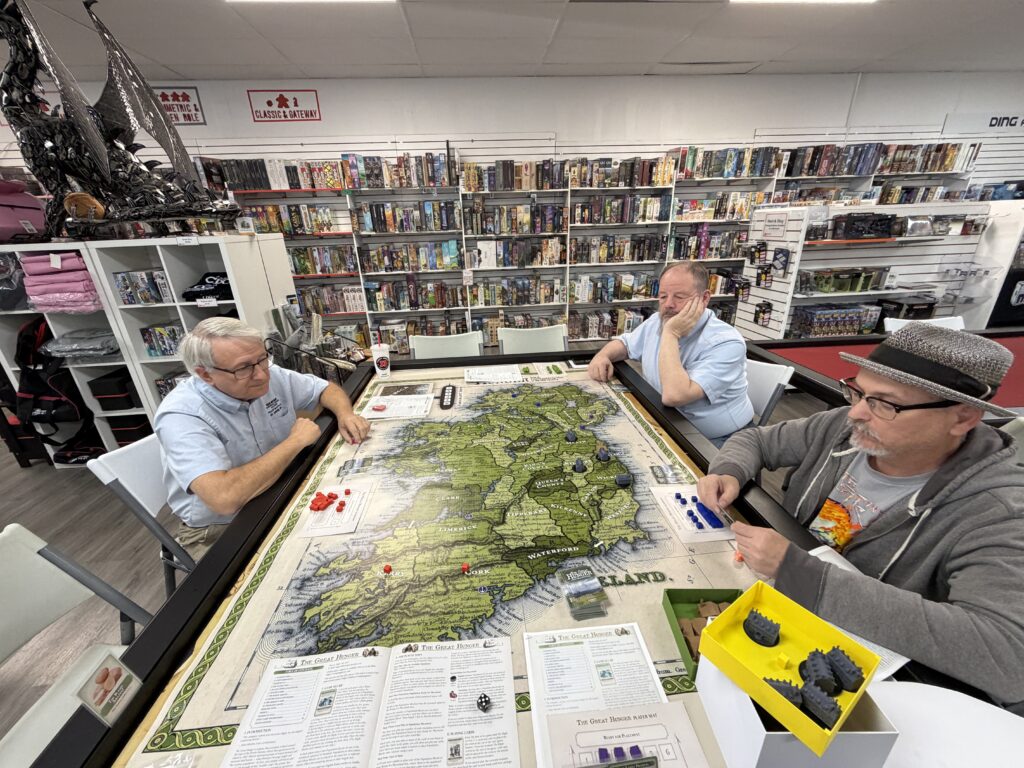
“Players for this game included O’Kevin, O’Steve, O’Jay, and O’DJ (had to get some Irish feel going there). DJ winds up going first and starts putting population out on the board. The initial spots people pick have DJ and Kevin in the northeast, Steve in the south and Jay in the northwest. The counties quickly fill up along with the estates and factories.”
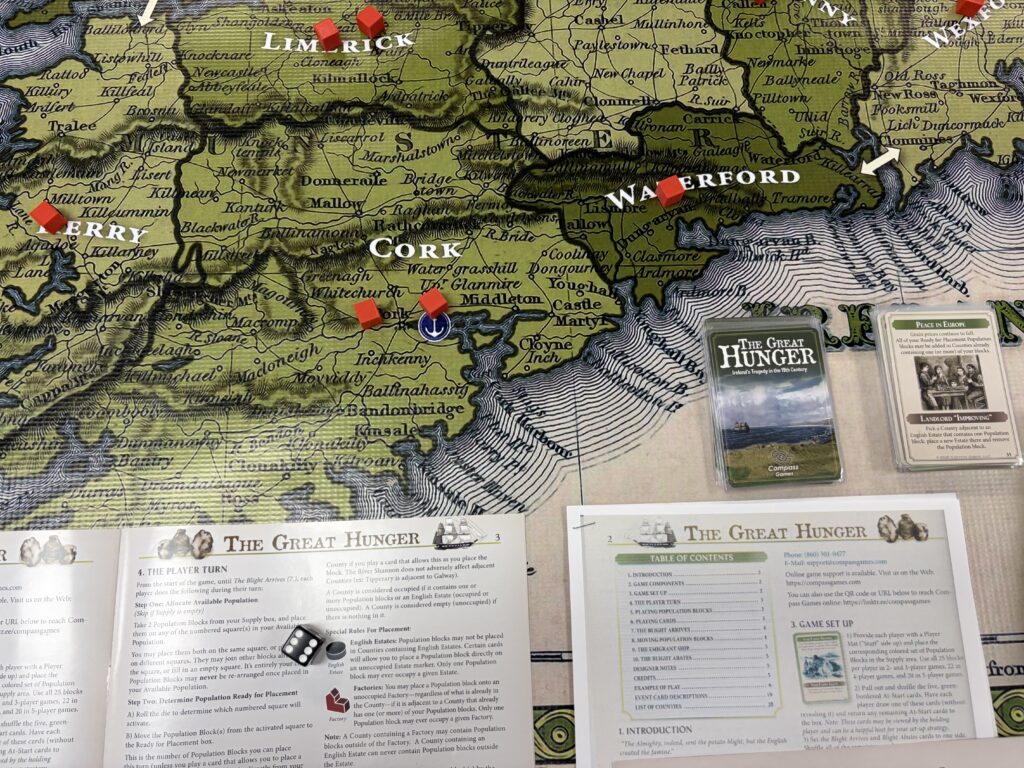
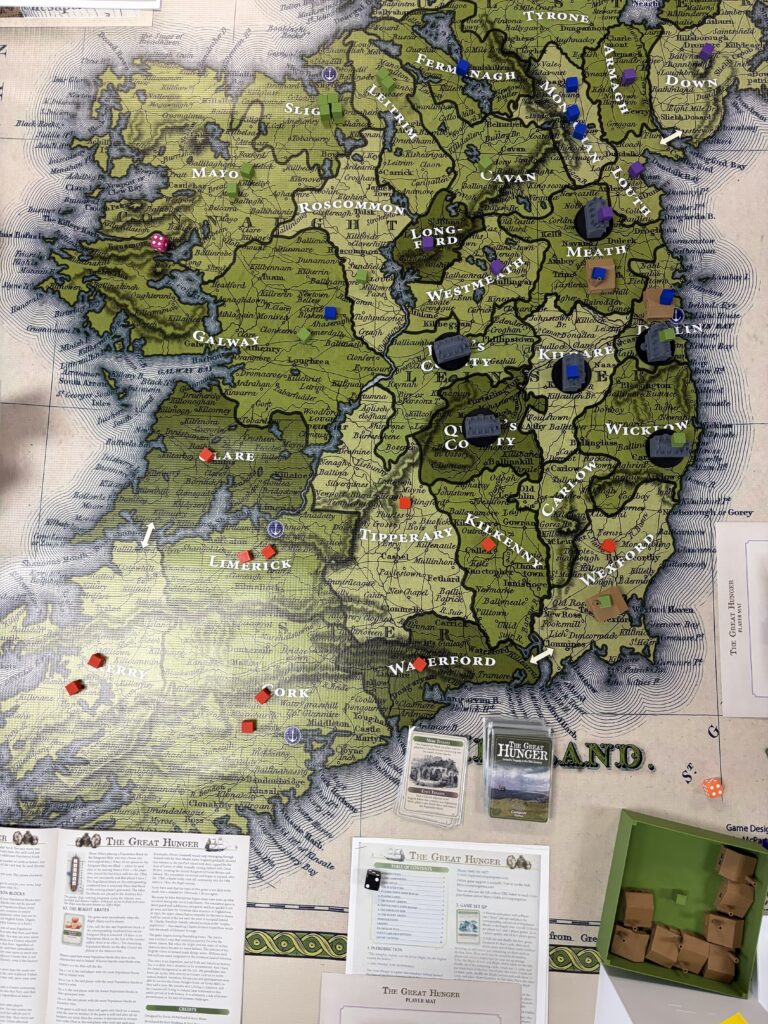
“Jay draws the potato blight card (last possible card it could be) and the standings are DJ with 17 cubes on the board followed by Steve with 16, Jay 14 and Kevin with 12. Steve and Jay have a number of cards saved up while Kevin and DJ don’t have as many cards. The race is now on to eliminate opponent population and also to get population to America (Once in America, the population cubes are safe there). DJ opens with sending a boat (rolling and losing one of his own cubes) along with eliminating 2 each of Kevin and Steve’s cubes. Steve unloads his hand of death and eliminates a lot of DJ’s cubes along with some of Jay’s cubes. (Jay had some cards that prevented Steves cards from removing Jays cubes). Steve also makes a push for immigration with DJ and soon both are dueling to see who can have the most Irish in America. The pace of cubes coming off the board slows down a bit as players empty their hands. (You get to draw 1 card at a time, but can have any number of cards in your hand). Eventually, the potato famine comes to an end and we take a count of who has what for cubes.”
“DJ had 11, Jay with 10 and Kevin and Steve had 9. We didn’t have to implement the tie breaker, which is interesting. Essentially if there is a tie, you roll a die. 1 or 2, whoever has the most in America wins. 3 or 4, whoever has the most in Ireland wins. The others deal with how many cubes you lost during the famine phase, etc. All in all, a very close game at the end and congrats to DJ for a well played game!”
Thanks to O’Jay for this great summary of the game and the photos are as always super! A Thank You to all the players who came out to enjoy an interesting day of gaming. As always we extend our ongoing appreciation to Miniature Market for their continued support.
Remember to shop local!
Big Muddy Historical Game Alliance of Greater St. Louis
Our public educational demonstrations including rules and game evaluation sessions use historical miniature and historical board gaming to explore military history, historical decision-making, and the people, places, and events of the past.
Historical Gaming in Action is a public educational program presented by the Big Muddy Historical Game Alliance of Greater St. Louis.
Using miniature figures, terrain, maps, historical research, and guided play, our games explore military history through the decisions faced by commanders, soldiers, and communities. Visitors can examine the table, ask questions, learn about the historical setting, and—when space and time permit—join the game.
Our scenarios are based on historical sources. While game rules simplify some details for practical play, each event is designed to encourage discussion of historical events, geography, leadership, logistics, strategy, and the human experience of conflict.
Historical gaming can be both enjoyable and educational. Big Muddy provides public educational demonstrations, seminars, and convention programming that promote historical miniature gaming and military history.


Wish I lived closer to yinz. Keep up the good work.
If you are ever able to attend, you are always welcome.